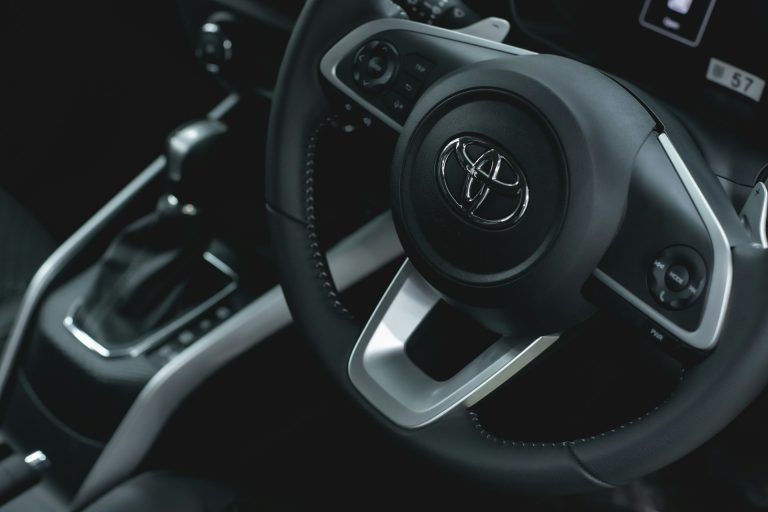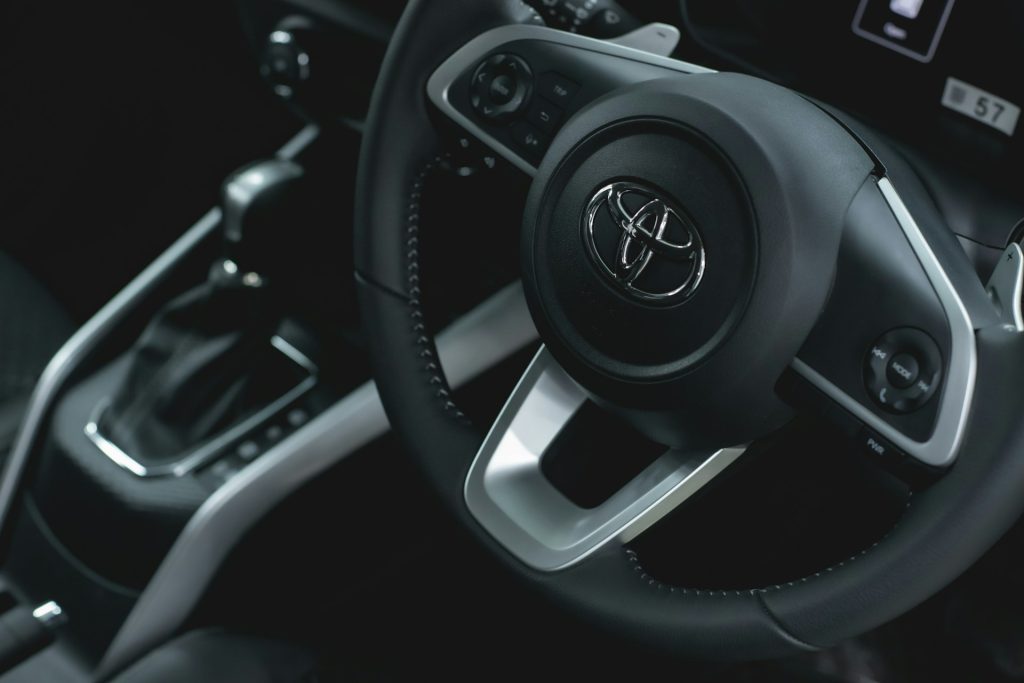
Toyota’s smallest contender has undergone a significant transformation, abandoning its pure gasoline roots in favour of a hybrid system. With a starting price of £16,845, the question remains whether this shift allows the Aygo X to compete effectively against the new wave of compact electric vehicles.
Addressing Past Shortcomings
When the original Aygo X debuted in 2022, the reception was somewhat mixed. While we wanted to embrace the vehicle more enthusiastically than reality allowed, there were undeniable drawbacks. The car offered neat handling, distinctively characterful looks, and that appealing “tiny car” agility. However, these positives were largely undermined by an underpowered, three-cylinder engine that often felt like it was gasping for air.
Furthermore, the pricing strategy placed it notably higher than key competitors like the Hyundai i10, Dacia Sandero, Kia Picanto, and Suzuki Ignis, making it a difficult option to recommend to value-conscious buyers.
Evolution Under the Hood
The latest evolution of the car retains the diminutive footprint that is fundamental to the Aygo X’s identity but now pairs it with the highly economical hybrid powertrain borrowed from the Yaris. Visually, the vehicle sports an updated front-end design that draws clear inspiration from the larger, more premium Lexus LBX.
Beyond the mechanical changes, Toyota claims to have improved cabin isolation, addressing noise concerns. The equipment list is also robust across the range, aiming to offer better value than its predecessor.
Dimensions and Weight Trade-offs
Despite the updates, the car remains incredibly compact. At 3,776 mm, it is notably shorter than B-segment subcompacts like the Peugeot 208 and the Toyota Yaris. To find anything smaller, one would have to look at vehicles like the five-door Hyundai i10 or the Fiat 500. With the Smart Fortwo no longer in the picture, the Aygo X represents one of the smallest options on the market.
However, the shift to hybrid technology has impacted the vehicle’s weight. With its 30-litre fuel tank filled, our test model tipped the scales at 1,102 kg. For comparison, we weighed a high-spec version of the outgoing model—equipped with the old naturally aspirated three-cylinder engine—at just 974 kg. Similarly, a 1.0-litre Kia Picanto tested in 2024 weighed in at 985 kg.
Clearly, the increased engine capacity (now 1,490 cc) and the addition of a battery pack beneath the rear seats have introduced a weight penalty. That said, the Aygo X Hybrid remains roughly 300 kg lighter than an equivalent electric vehicle, maintaining a weight advantage in that regard.
Engineering Innovations
Integrating this technology required some engineering ingenuity from Toyota to fit a 0.8 kWh battery pack into the TNGA-B platform. Unlike the Yaris and other models where the two cell modules are stacked, the Aygo X sees them placed longitudinally under the rear seats to save space.
Consequently, the cooling system, which typically sits next to the battery, has been relocated to below the front section of the rear seats, while the auxiliary battery now resides under the trunk floor. This revised layout provided an unexpected benefit: it created sufficient room for a new air-conditioning system, allowing higher trim levels to feature dual-zone climate control for the first time.