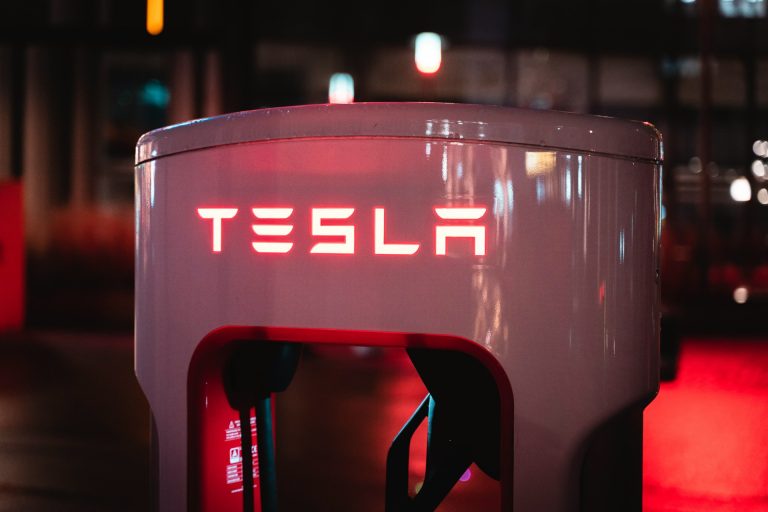
In a move that has caught industry analysts off guard, Tesla Inc. has officially restarted development on its Dojo 3 supercomputer program. This decision marks a sharp strategic U-turn for the Austin-headquartered giant, coming just months after the initiative appeared to be permanently shelved. The renewed push signals not only a return to proprietary hardware development but also a significant expansion of scope, moving beyond autonomous driving to what CEO Elon Musk describes as “space-based AI compute.”
A Sudden Resurrection Following a Summer Purge
The landscape looked vastly different in August 2025. At the time, Tesla seemed to have drawn a line under its internal supercomputing efforts. Following the departure of project lead Peter Bannon, the company dissolved the responsible team, sparking reports that the Dojo program was effectively dead. Industry sources, including TechCrunch, noted that a contingent of these former Tesla specialists subsequently resurfaced at DensityAI, a startup founded by ex-Tesla engineers focused on high-performance data infrastructure.
during that interim period, the prevailing market sentiment was that Tesla would pivot toward a heavy reliance on external suppliers. The expectation was that the automaker would lean on NVIDIA and AMD for processing power, with Samsung serving as a key manufacturing partner, while its own custom silicon ambitions faded into the background.
The AI5 Chip and a New Hiring Blitz
The narrative shifted dramatically following a succinct update from Musk on X, where he characterized the company’s AI5 chip design as being “in good shape.” This validation served as the catalyst for bringing Dojo 3 back online. Far from a tentative restart, the company has launched an aggressive recruitment drive, targeting seasoned chip and system engineers. The pitch to potential talent is bold: Tesla is positioning its proprietary processors as contenders for some of the highest-volume chips in the entire semiconductor industry.
Retrospectively, the pause initiated in the summer of 2025 appears less like a termination and more like a radical recalibration. The project has emerged from its hiatus with sharpened technological demands and a broader operational mandate.
From Earthbound Autonomy to Orbital Computing
While the original Dojo architecture was primarily designed to ingest and process vast streams of video data from Tesla’s vehicle fleet—aiming to refine the neural networks behind the Full Self-Driving (FSD) system—Dojo 3 has a more expansive horizon. The goal is no longer solely about reducing driving errors or exceeding human safety standards on the road. According to reports citing Musk’s recent communications, the new iteration is intended to serve as the foundation for artificial intelligence computing power located in Earth’s orbit, fundamentally changing the logistical map of where data processing occurs.
Challenging the Industry’s Pulse
Tesla’s technical strategy for this revival is defined by blistering speed. The company is eyeing development cycles that are significantly shorter than the industry standard. Musk has suggested a cadence of releasing new chip generations roughly every nine months. If achieved, this pace would eclipse the release schedules of established silicon titans like Intel, AMD, and NVIDIA, placing Tesla in a highly offensive position within the chip market.
Technical specifications emerging from sources like Tom’s Hardware indicate that the AI5 chip, manufactured by TSMC, is targeting performance metrics comparable to NVIDIA’s Hopper architecture. In clustered configurations, it reportedly aims to rival the Blackwell series. Crucially, Tesla claims these performance levels will be achieved with noticeably lower power consumption and costs. If the company can deliver on this blend of efficiency and raw power, it could reverse its recent supply chain dynamics, prioritizing internal hardware over external procurement for its data centres.
Market Standing and Financial Context
This technological pivot plays out against the backdrop of Tesla’s massive financial footprint. Currently trading at €361.90, with a day range between €361.00 and €362.05, the company commands a staggering market capitalization of €1.37 trillion. The market’s expectations for future growth remain incredibly high, reflected in a P/E ratio of 384.47, despite an Earnings Per Share (EPS) of just €0.94.
Founded in 2003 by a group including Martin Eberhard and Marc Tarpenning, and later defined by the leadership of Musk and Jeffrey B. Straubel, the company has evolved far beyond its initial automotive remit. While the Automotive segment continues to drive revenue through vehicle sales and regulatory credits, the Energy Generation and Storage segment—encompassing solar technology and battery systems—remains a critical pillar of the business. With a public float of 2.39 billion shares and a beta of 1.22, the stock remains a volatile but heavyweight fixture in the global market, reacting sharply to shifts in technology strategy like the Dojo revival.